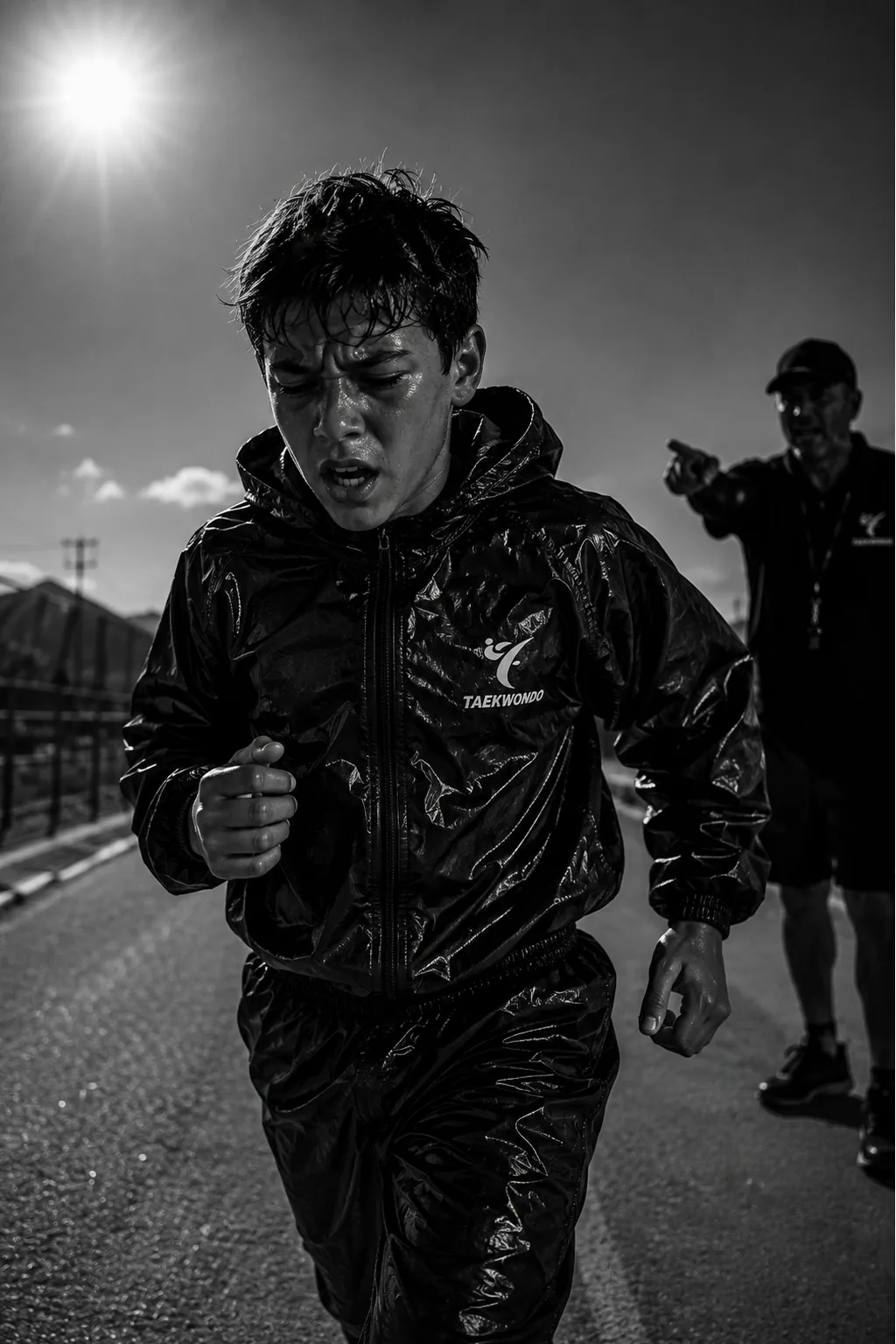
RECOGNIZE.
Notice coercion, secrecy, dangerous methods, body shaming, unrealistic targets, and pressure to continue despite illness or distress.
STOP.
End the cut and training session when an athlete is unwell. Urgent symptoms require prompt medical help, not another attempt to make weight.
REPORT.
Share safeguarding concerns through the responsible club, governing body, school, healthcare, emergency, or legal channel.
Did you know?
WHAT DANGEROUS WEIGHT CUTTING CAN LOOK LIKE
The concern is not limited to one method or one weigh-in. Look at the target, timeframe, supervision, athlete's age and health, power imbalance, and consequences for objecting.
Several behaviors together may reveal a system that values eligibility or results over athlete welfare.
- Forced dehydrationRestricting fluids or demanding prolonged sweating, heat exposure, or repeated hot baths can create serious medical risk.
- Sweat suits and heat-trapping clothingPlastic, rubberized, or other impermeable sweat suits trap heat and can accelerate dangerous dehydration. They are not a safe weight-management tool and should not be used to force rapid weight loss. Combining them with hard exercise, hot environments, or fluid restriction increases the danger.
- Severe food restrictionWithholding meals, monitoring every bite, or requiring fasting without appropriate clinical oversight can undermine health, recovery, growth, and performance.
- Unsafe substances or purgingPressure to vomit or use laxatives, diuretics, stimulants, unverified supplements, or other substances is a major warning sign.
- Training through illnessConfusion, fainting, vomiting, severe weakness, chest pain, breathing difficulty, or inability to function normally must never be treated as proof of commitment.
- Body shaming and public weigh-insHumiliation, insults, photographs, rankings, or public discussion of an athlete's body can cause emotional harm and silence concerns.
- Threats, secrecy, or retaliationLost selection, reduced coaching, exclusion, punishment, or instructions to hide methods from parents and medical professionals indicate coercive control.
TAKE ACTION
REPORT CONCERNS.
If an athlete collapses, has a seizure, is confused, cannot be awakened normally, has chest pain, has difficulty breathing, or appears seriously unwell, stop activity and contact emergency services where you are located.
Do not leave the athlete alone or pressure them to continue cutting, train, weigh in, or compete. A healthcare professional should assess urgent symptoms.
Safeguarding concerns may also be reported to the club, school, sport organization, national governing body, or safeguarding authority responsible for the activity. Preserve relevant messages, plans, weigh-in records, and a factual account.
Not in the USA?Click here to find out how to report in your area.